

Many primary school English teachers share the same concern: students can read a text and answer comprehension questions, but are they able to use that language to express their own ideas?
Reading comprehension is a fundamental part of learning a foreign language, but the real goal goes much further. We want students to use English to communicate, create, express opinions, and connect what they read with their own experiences.
Therefore, one of the most important questions is not how much our students read, but what they do after reading.
In this article, we share real-world examples of student work based on various readings from Bookroom Bites, the collection of printed primary school workbooks that is part of Read & Play. The examples demonstrate how reading appropriate to a student’s level can become an opportunity to develop comprehension, vocabulary, writing, and personal expression.
Why is it important to work on production after reading?
Research on language learning shows that reading is one of the most effective ways to acquire vocabulary and linguistic structures naturally.
However, to truly consolidate that learning, students need opportunities to:
- Retrieve information from the text.
- Relate what you have read to your own experiences.
- Express personal opinions and ideas.
- Use the new vocabulary in meaningful contexts.
When this happens, reading ceases to be a passive activity and becomes a tool for developing communicative competence.
Example 1: I Love Cooking
Level: A1
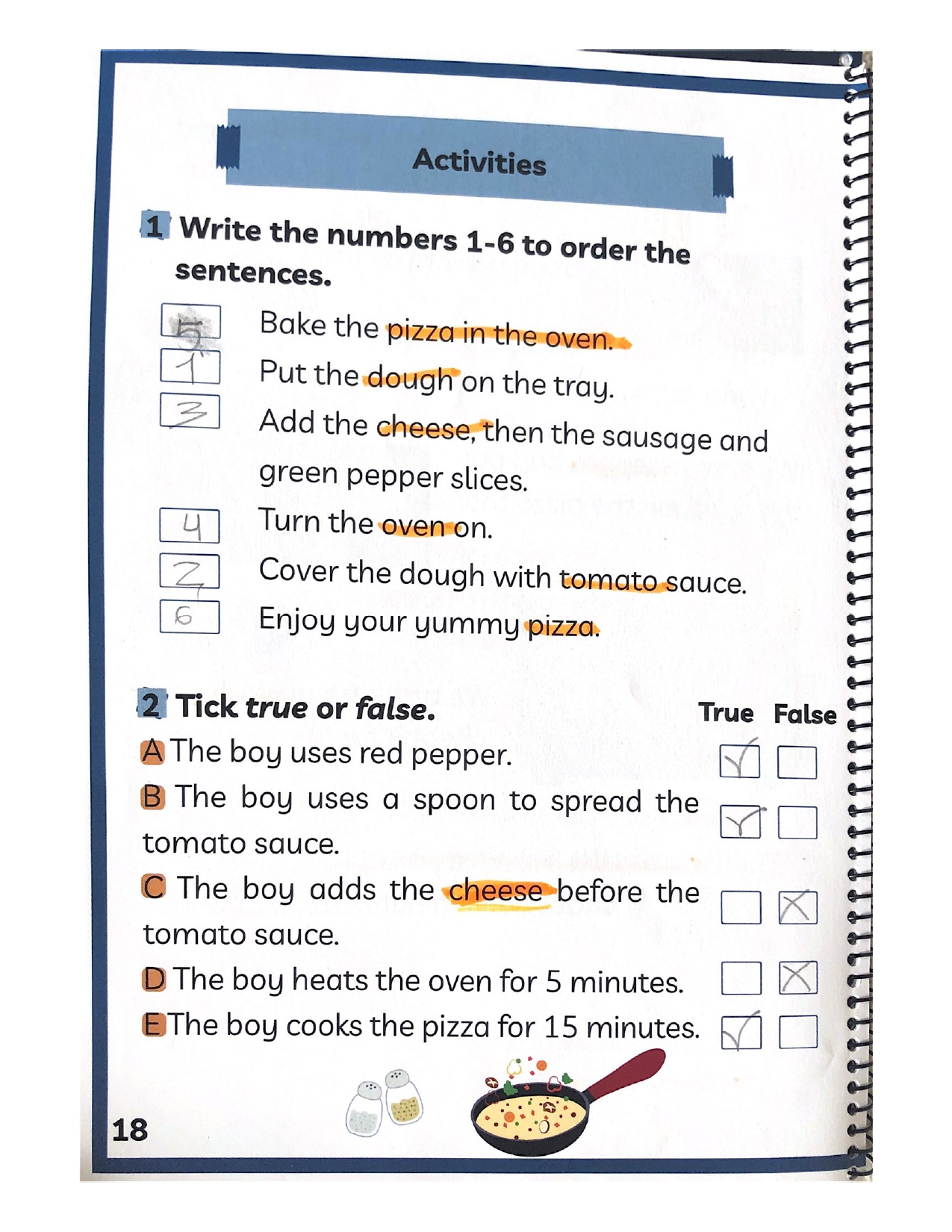
In this reading, students follow a recipe to prepare a pizza while practicing food-related vocabulary, understanding instructions, and sequencers.
What does this activity work on?
- Food vocabulary.
- Reading comprehension.
- Understanding instructions.
- Use of sequencers.
After reading the story, the students not only demonstrate that they understand the sequence of steps, but are also able to apply that knowledge creatively by designing their own pizza and describing its ingredients.
This is where understanding is transformed into language production.

Example 2: My Brother and I
Level: A1
This reading presents two brothers who discover their similarities and differences.
What does this activity work on?
- Compare information.
- Tastes and preferences.
- Reading comprehension.
- Production of written work.
After analyzing the information in the text, students use visual organizers and writing activities to talk about themselves.
In this way, language ceases to belong solely to the characters in the story and becomes part of the student’s personal experience.


Example 3: The Big Game
Level: A1
In this story, Nick and his team compete in the championship final.
What does this activity work on?
- Sports vocabulary.
- Reading comprehension.
- Creative expression.
- Personal communication.
After working on vocabulary and understanding the story, the students design their own football shirt and describe the characteristics of their team.
This activity allows us to see how students use new vocabulary to communicate their own ideas, one of the best pieces of evidence of meaningful learning.


Example 4: Autumn
Level: A1
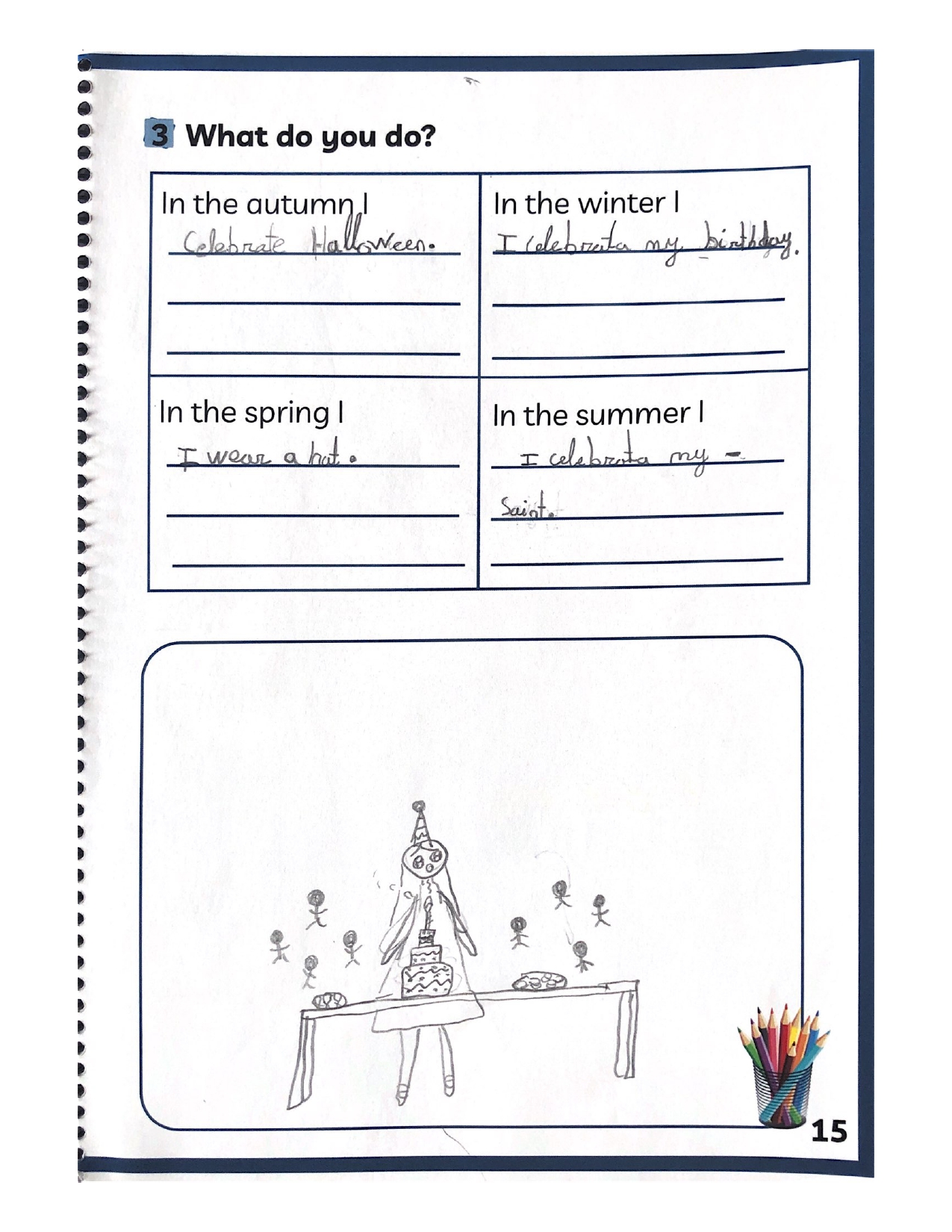
The reading explores typical autumn activities while introducing seasonal vocabulary and simple present tense structures.
What does this activity work on?
- Present simple.
- Seasonal vocabulary.
- Sentence construction.
- Personal expression.
After completing comprehension activities, students transfer the learned language to personal situations, writing about what they do in different seasons of the year.
This type of task helps to consolidate language because it forces students to use it in authentic and relevant contexts.

What do these examples tell us?
When students read texts appropriate to their level and have well-sequenced activities, they are able to do much more than answer comprehension questions.
Students can:
- Organize information.
- Use new vocabulary.
- Express opinions.
- Relate the reading to their own reality.
- Create original work in English.
In other words, reading becomes a tool for developing communicative competence in a natural way.
Bookroom Bites: from reading to production
Bookroom Bites is part of Read & Play, our solution for developing reading habits and English language skills during primary school. Each booklet combines graded readers with activities that go beyond literal comprehension and help students retrieve information, reflect, write, and communicate their own ideas. Because learning English isn’t just about understanding texts. It’s about using language to think, create, and express yourself.
Download real examples of student work
We have compiled these examples into a downloadable document so you can see how Bookroom Bites activities help transform reading into meaningful learning.
Bookroom Bites forma parte de Read & Play, nuestra propuesta para desarrollar la comprensión lectora, la escritura y la producción oral en inglés en Primaria. Si quieres conocer el proyecto completo, puedes descubrir más sobre Read & Play aquí.